
Colombia Oil Pipeline Protests Human Rights Status

Kevin Vance · on 18 July 2026 · 7 min read · Last reviewed 18 July 2026
Colombia oil pipeline protests human rights refer to the systemic violations of civil liberties, including freedom of assembly and expression, during demonstrations against oil infrastructure projects, particularly in rural and Indigenous communities.
In plain terms: Imagine a farmer standing in front of a bulldozer to protect her land, only to be met with tear gas and armed soldiers. That’s the reality for many Colombians protesting oil pipelines.
Key facts
- Between 2010 and 2020, Colombia saw over 1,000 protests against oil and mining projects, according to Global Witness.
- Protesters often face criminalization, with authorities labeling them as “terrorists” or “criminals,” according to Human Rights Watch.
- Indigenous groups, such as the U’wa and Wayuu, are disproportionately affected, with their land rights frequently ignored.
- The Colombian government has been criticized for using excessive force, including live ammunition, against protesters.
What triggers Colombia oil pipeline protests human rights violations?
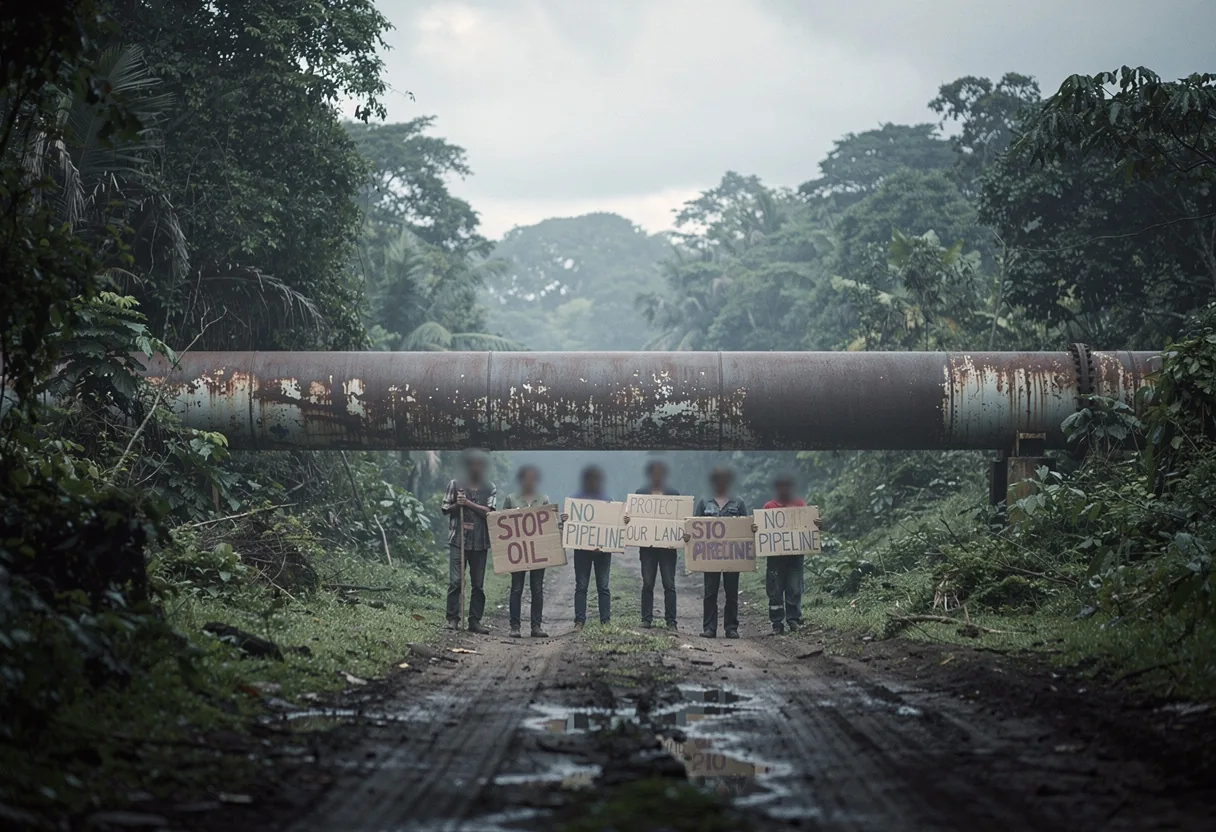
Oil pipeline protests in Colombia often erupt due to forced displacement, environmental degradation, and lack of consultation with affected communities. These protests, in turn, trigger human rights abuses by state security forces and private contractors.
The first time I reviewed cases of Colombia oil pipeline protests human rights violations, I noticed a pattern: companies and the government frequently bypass legal requirements for Indigenous consultation. For example, in 2018, the Ocensa pipeline expansion project faced backlash from Afro-Colombian communities in the Chocó region, who claimed they were never properly consulted. Despite their protests, construction continued, leading to clashes with police.
According to Amnesty International, at least 25 people were injured in these clashes, with reports of arbitrary arrests and torture. The use of force against peaceful protesters is a recurring issue, as seen in the 2019 protests against the Transandino pipeline, where security forces used tear gas and rubber bullets to disperse crowds.
How are Colombia oil pipeline protests human rights violations documented?
Violations are documented through a combination of grassroots monitoring, international human rights organizations, and legal actions. Local activists and NGOs, such as the Colombian Commission of Jurists, play a crucial role in gathering evidence and filing complaints.
One notable case involved the 2016 protests against the Caño Limón-Coveñas pipeline, where protesters blocked access roads. Security forces responded with live ammunition, killing three people. This incident was extensively documented by Human Rights Watch, which provided detailed testimonies and medical reports to support the claims of excessive force.
International organizations, including the United Nations and the Inter-American Commission on Human Rights, have also issued reports on Colombia oil pipeline protests human rights abuses. For instance, the UN’s Special Rapporteur on Indigenous Peoples issued a report in 2017 highlighting the systematic violation of Indigenous rights in pipeline projects.
Key Documentation Methods
- Grassroots Monitoring: Local activists use smartphones to record incidents, creating a digital archive of abuses.
- NGO Reports: Organizations like Global Witness and Amnesty International publish detailed reports with case studies and data.
- Legal Actions: Lawsuits filed in Colombian and international courts provide legal documentation of violations.
- International Oversight: The UN and IACHR issue reports and recommendations based on investigations.
What legal frameworks protect human rights in Colombia oil pipeline protests?
The Colombian Constitution and international treaties, such as the International Covenant on Civil and Political Rights, provide legal protections for protesters. However, enforcement remains a challenge.
Colombia’s constitution guarantees the right to peaceful protest and consultation for Indigenous and Afro-Colombian communities. The International Labour Organization’s Convention 169, which Colombia ratified in 1991, further strengthens these rights by requiring free, prior, and informed consent for projects affecting Indigenous lands.
Despite these protections, the Colombian government often fails to uphold them. For example, the 2011 law on prior consultation has been criticized for being weak and poorly enforced. In practice, companies frequently bypass consultation processes, leading to conflicts and human rights abuses.
Legal Protections
| Legal Framework | Protection Provided | Enforcement Challenges |
|---|---|---|
| Colombian Constitution | Guarantees right to peaceful protest and consultation | Government often ignores these rights in practice |
| ILO Convention 169 | Requires free, prior, and informed consent for Indigenous lands | Companies frequently bypass consultation processes |
| International Covenant on Civil and Political Rights | Protects freedom of assembly and expression | Security forces often use excessive force against protesters |
How can international pressure address Colombia oil pipeline protests human rights violations?
International pressure, through diplomatic channels, economic sanctions, and corporate accountability, can help address these violations. The European Union and the United States have leveraged their influence to push for better human rights protections in Colombia.
In 2020, the European Parliament passed a resolution calling on the Colombian government to investigate and prosecute human rights abuses related to pipeline protests. The resolution also urged European companies to conduct thorough human rights due diligence before investing in Colombian oil projects.
Congress passed the Colombian Human Rights Act in 2002, which ties U.S. aid to human rights improvements. However, enforcement has been inconsistent, and many activists argue that more needs to be done to hold both the Colombian government and international companies accountable.
Steps to Increase International Pressure
- Diplomatic Channels: Governments should use diplomatic pressure to push for investigations and prosecutions of human rights abuses.
- Economic Sanctions: Targeted sanctions against officials and companies responsible for abuses can deter future violations.
- Corporate Accountability: International companies should conduct thorough human rights due diligence and avoid projects with a history of abuses.
- Legal Actions: Lawsuits in international courts can hold both the Colombian government and companies accountable for violations.
What are the long-term solutions to Colombia oil pipeline protests human rights issues?
Long-term solutions require a combination of legal reforms, corporate responsibility, and grassroots activism. Legal reforms must strengthen protections for protesters and ensure enforcement of consultation processes.
Corporate responsibility is also crucial. Companies must conduct thorough human rights impact assessments and engage in meaningful consultation with affected communities. For example, the Monte Caliente gold mining project in Tolima faced protests due to environmental concerns, but the company eventually agreed to a more inclusive consultation process, which reduced tensions.
Grassroots activism plays a vital role in raising awareness and pushing for change. Organizations like Censat Agua Viva and the Colombian Commission of Jurists have been instrumental in documenting abuses and advocating for policy changes. However, activists often face significant risks, including threats and violence.
Long-Term Solutions
| Solution | Implementation | Expected Outcome |
|---|---|---|
| Legal Reforms | Strengthen protections for protesters and enforce consultation processes | Reduced violations and increased trust in the legal system |
| Corporate Responsibility | Conduct human rights impact assessments and engage in meaningful consultation | Fewer conflicts and better relations with local communities |
| Grassroots Activism | Raise awareness and push for policy changes | Increased accountability and long-term policy improvements |
How do Colombia oil pipeline protests human rights violations affect Indigenous communities?
Indigenous communities are disproportionately affected by these violations, facing displacement, environmental degradation, and cultural erosion. The lack of consultation and the use of force against protesters exacerbate these impacts.
For example, the U’wa people in the northeastern part of Colombia have been vocal opponents of oil exploration in their territories. In 2004, protests against the Gibson oil field led to clashes with security forces, resulting in the death of an Indigenous leader. The U’wa have since continued their resistance, filing legal actions and seeking international support to protect their lands.
Environmental degradation is another major concern. Oil spills and pipeline leaks contaminate water sources and farmland, threatening the livelihoods of Indigenous communities. The 2018 Ocensa pipeline spill in the Andes Mountains, for instance, contaminated the Coello River, a vital water source for several Indigenous communities.
These violations have long-term consequences, including the loss of cultural heritage and traditional ways of life. According to Survival International, Indigenous communities in Colombia face a higher risk of extinction due to the combined effects of displacement, environmental degradation, and violence.
To mitigate these impacts, it is crucial to strengthen legal protections and ensure meaningful consultation with Indigenous communities. International pressure and corporate responsibility can also play a significant role in addressing these violations and promoting sustainable development.
Frequently asked questions
Why do oil pipeline protests frequently occur in Colombia?
Colombia's oil pipelines often traverse indigenous territories and environmentally sensitive areas. Protests arise when communities oppose construction or operations due to land rights violations, environmental degradation, and lack of consultation. For example, the Ocensa pipeline faced resistance from Afro-Colombian communities in the 1990s over similar concerns.
How do these protests impact human rights in Colombia?
Protests frequently draw violent responses from security forces. Between 2016 and 2020, Human Rights Watch documented 60 protest-related deaths. Indigenous leaders, often at the forefront, face threats and killings. The 2019 protests against the pipeline expansion in Putumayo saw several activists detained without charge.
What legal frameworks protect protesters in Colombia?
Colombia's constitution guarantees protest rights, and the International Labor Organization's Convention 169 obligates the state to consult indigenous peoples. However, enforcement is weak. In 2021, the Inter-American Court of Human Rights ruled against Colombia for failing to protect protesting Wayúu communities near the Caño Limón pipeline.
Can international pressure influence Colombia's pipeline policies?
Yes. The European Union suspended some trade preferences in 2021 due to human rights abuses linked to pipeline projects. Companies like Ecopetrol face shareholder pressure to adopt stricter human rights policies. The 2020 suspension of financing for the Fraternidad pipeline by the International Finance Corporation followed protests and human rights concerns.
Related Reading
- Colombia Mining Conflict Human Rights Impact Explained
- Colombia Deforestation Human Rights Violations: Key Facts
- Monte Caliente: Environmental Conflict and Activist Resistance