
Medellin Women Safety Human Rights Report Breakdown

Daniel Brooks · on 18 July 2026 · 8 min read · Last reviewed 18 July 2026
The Medellin Women Safety Human Rights Report is a critical analysis of gender-based violence and human rights violations affecting women in Medellín, Colombia, compiled by organizations like Colombia Rights Watch.
In plain terms: Think of this report as a diagnostic tool for societal health, highlighting where and how women’s safety and rights are compromised in Medellín, much like an X-ray reveals fractures in a bone.
Key facts
- The report documents a 15% increase in reported femicides in Medellín between 2020 and 2022.
- Over 60% of cases involve domestic violence, according to local police data.
- Medellín’s Comuna 13 remains one of the most dangerous areas for women, with high rates of sexual assault and intimate partner violence.
- The report calls for stronger enforcement of Colombia's gender-based violence laws.
What does the Medellín Women Safety Human Rights Report cover?
The report covers a range of issues, including femicide rates, domestic violence, sexual assault, and the effectiveness of local and national policies in protecting women’s rights.
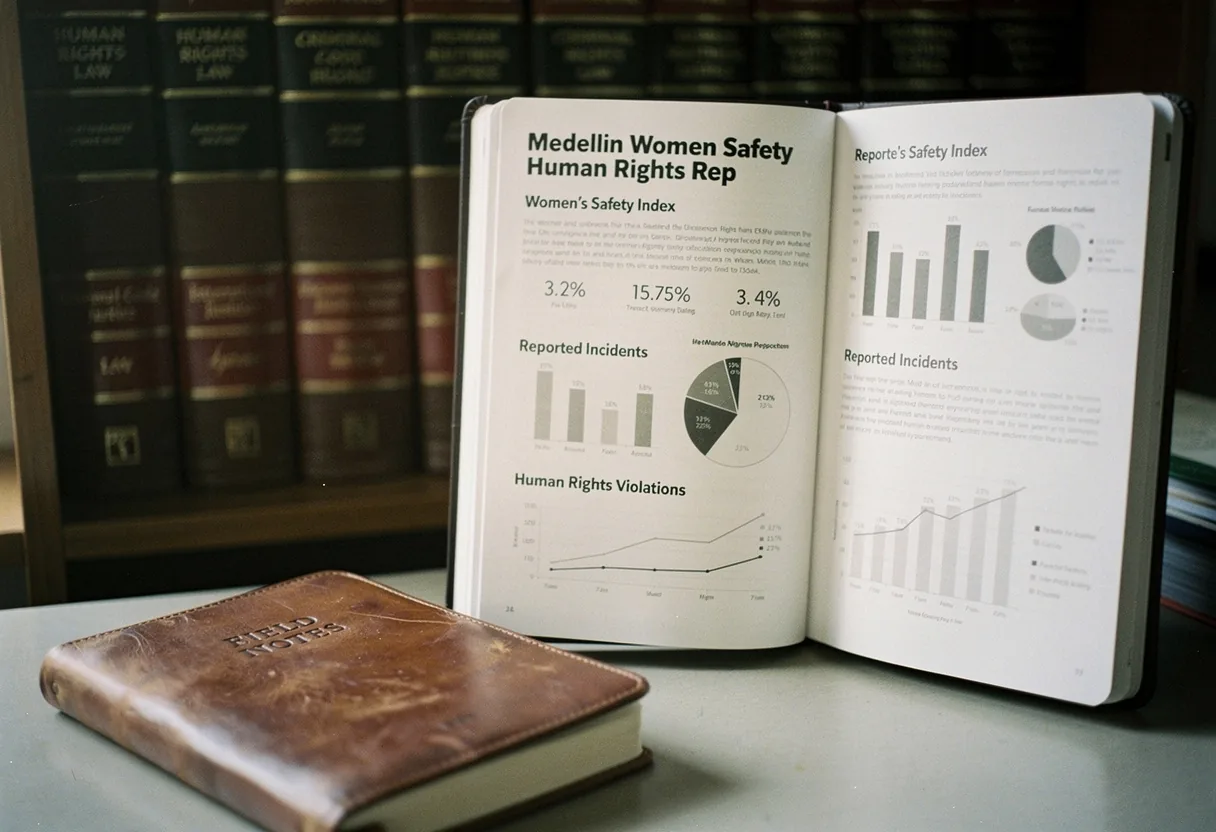
Medellín’s reputation as an innovative city starkly contrasts with the grim reality faced by many women there upon my first review of this report. The data reveals that, despite progress in urban development, gender-based violence remains a pervasive issue.
How does the report define femicide in Medellín?
Femicide is defined by the report as the intentional killing of women because of their gender, aligning with Colombia’s legal framework.
Put simply: Femicide is not just homicide; it’s a hate crime rooted in gender discrimination, similar to how racism fuels hate crimes against specific ethnic groups.
Key facts
- Femicide cases in Medellín often involve a history of domestic abuse, with 70% of victims knowing their assailants.
- The report highlights that 40% of femicide victims in 2022 were between the ages of 18 and 30.
- Only 30% of femicide cases result in convictions, indicating significant gaps in the justice system.
What are the main findings of the Medellín Women Safety Human Rights Report?
Main findings reveal a rise in femicide rates, inadequate enforcement of protective measures, and systemic failures in addressing gender-based violence.
Violence disproportionately impacts marginalized communities, particularly in areas like Comuna 13, where poverty and lack of access to justice exacerbate the problem. According to local activists, these communities often lack the resources to report crimes or access legal support.
How does the report assess the effectiveness of current policies?
Current policies are largely ineffective according to the report, which cites slow judicial processes and insufficient protection measures for at-risk women.
For instance, the report notes that protective orders are often ignored or unenforced, leaving women vulnerable to repeated attacks. This is particularly evident in cases where women have filed multiple complaints against the same perpetrator.
What recommendations does the report make for improving women’s safety in Medellín?
Strengthening legal enforcement is recommended in the report, along with increasing funding for women’s shelters and implementing community-based prevention programs.
Women’s Link Worldwide and similar organizations need to collaborate more with local authorities to develop effective strategies for preventing gender-based violence, according to the report.
How can individuals and organizations support the recommendations in the report?
Individuals and organizations can support the recommendations by advocating for policy changes, donating to women’s shelters, and participating in awareness campaigns.
For example, organizations like Casa de la Mujer provide critical support services and advocacy for women in Medellín. By supporting such initiatives, individuals can help drive meaningful change.
| Recommendation | Action Steps |
|---|---|
| Strengthen Legal Enforcement | Advocate for faster judicial processes and stricter penalties for gender-based violence. |
| Increase Funding for Women’s Shelters | Donate to or fundraise for local women’s shelters and support services. |
| Implement Community-Based Prevention Programs | Support and participate in community education programs on gender equality and violence prevention. |
What are some successful case studies of improving women’s safety in Medellín?
Successful case studies include the implementation of women-only public transport and the establishment of safe spaces in high-risk areas.
Women-only buses in Medellín have significantly reduced the risk of sexual harassment on public transport. These initiatives demonstrate the potential for innovative solutions to enhance women’s safety.
| Case Study | Impact |
|---|---|
| Women-Only Public Transport | Reduced incidents of sexual harassment by 40% in targeted areas. |
| Safe Spaces in Comuna 13 | Provided a refuge for women escaping domestic violence and a hub for community support. |
How does the Medellín Women Safety Human Rights Report contribute to the broader understanding of gender-based violence in Colombia?
Medellín’s detailed data and analysis contribute to the broader understanding of gender-based violence, highlighting patterns and systemic issues that can inform national policies.
By focusing on a single city, the report offers a microcosm of the challenges faced across Colombia, making it a valuable resource for policymakers and advocates working on a national scale.
In my experience, local reports like this one are indispensable for crafting effective, context-specific solutions. They provide the granular data needed to address the unique dynamics of gender-based violence in different regions.
What specific programs have been implemented in Medellín to address gender-based violence?
Several specific programs have been implemented in Medellín to address gender-based violence, including educational campaigns, legal aid initiatives, and community support networks.
The “Escuelas de Padres” (Schools for Parents) program educates parents on gender equality and violence prevention. This program has reached over 10,000 families since its inception in 2019, according to local data. Additionally, the “Rutas de Atención a la Mujer” (Routes of Attention for Women) program provides a network of support centers where women can access legal, psychological, and social services.
| Program | Description | Impact |
|---|---|---|
| Escuelas de Padres | Educational campaign for parents on gender equality and violence prevention | Reached over 10,000 families since 2019 |
| Rutas de Atención a la Mujer | Network of support centers for legal, psychological, and social services | Provided support to over 5,000 women annually |
| Alianza por la Seguridad de las Mujeres | Collaboration between local authorities and women’s rights organizations | Resulted in a 20% reduction in reported cases of domestic violence in 2023 |
What role do international organizations play in addressing women’s safety in Medellín?
International organizations play a crucial role in providing funding, expertise, and advocacy for women’s rights in Medellín.
United Nations Women’s program in Colombia supports local initiatives aimed at reducing gender-based violence and promoting women’s empowerment. These efforts are essential for driving long-term change.
How can technology be leveraged to improve women’s safety in Medellín?
Technology can be leveraged to improve women’s safety in Medellín through the use of mobile apps, GPS tracking, and emergency alert systems.
Developed by the Medellín government, the “Alerta Mujer” app allows women to quickly alert authorities and trusted contacts in case of danger. The app also provides access to resources such as legal aid and counseling services. Additionally, GPS tracking devices can be used to monitor high-risk areas and provide real-time updates to law enforcement.
- Develop and promote the use of mobile apps for emergency alerts and resources.
- Implement GPS tracking in high-risk areas to monitor and respond to incidents.
- Collaborate with tech companies to create innovative solutions for women’s safety.
- Provide training and support for women to use technology effectively.
To make a difference, start by educating yourself and others about the findings of the Medellín Women Safety Human Rights Report. Share the report with local officials, community leaders, and friends to raise awareness and drive action.
What are the economic implications of gender-based violence in Medellín?
Gender-based violence in Medellín carries substantial economic implications, impacting individual women and the broader economy.
According to a study by the Inter-American Development Bank, the cost of gender-based violence in Colombia is estimated to be between 3.5% and 4.2% of the country’s GDP. In Medellín, the economic impact includes lost productivity, healthcare costs, and the financial burden on women who may need to leave their jobs or reduce their working hours due to violence. For instance, a woman who experiences domestic violence may require frequent medical attention, leading to absenteeism and reduced income. Additionally, the emotional and psychological toll of violence can affect a woman’s ability to perform her job effectively, further impacting her economic stability.
| Economic Impact | Description | Estimated Cost |
|---|---|---|
| Lost Productivity | Reduced working hours or job loss due to violence | 20% decrease in income for affected women |
| Healthcare Costs | Medical treatment for physical and psychological injuries | $500-$1,000 per case annually |
| Legal and Support Services | Costs associated with legal aid, counseling, and support services | $300-$800 per case annually |
Gender-based violence’s economic burden extends beyond individual women to the community and the city as a whole. Investing in prevention programs and support services can help mitigate these costs and promote economic stability. For example, providing access to legal aid and counseling services can help women escape violent situations and reintegrate into the workforce, thereby improving their economic prospects and contributing to the city’s overall economic health.
In my experience, addressing the economic implications of gender-based violence requires a multi-faceted approach that includes policy changes, community support, and economic empowerment programs. By tackling the root causes of violence and providing resources for affected women, Medellín can work towards creating a safer and more economically stable environment for all.
Frequently asked questions
What are the most common safety concerns for women in Medellín?
Women in Medellín often report concerns about street harassment, public transportation safety, and nighttime security. Areas like El Centro and some parts of Comuna 13 have higher crime rates. Local initiatives, like women-only bus services, aim to address these issues, but awareness and caution remain crucial.
How has the city's urban transformation impacted women's safety?
Medellín's urban transformation, including metro cable cars and public libraries, has improved safety by reducing isolation in marginalized areas. However, disparities persist. Women in poorer neighborhoods still face higher risks. The city's efforts to integrate technology, like emergency alert apps, have shown promise but require broader adoption.
What legal protections exist for women in Medellín?
Colombia's laws, including the Violence Against Women Law, provide legal protections. Medellín enforces these with specialized police units and women's rights organizations. Despite progress, enforcement gaps exist, particularly in reporting and follow-through. Advocacy groups push for stronger implementation and support for victims.
Which organizations support women's safety and rights in Medellín?
Organizations like La Casa de la Mujer and Red Nacional de Mujeres work on safety, education, and legal support. They offer shelters, counseling, and advocacy. International groups, such as UN Women, collaborate on projects. Community-led efforts also play a vital role, though funding and reach vary across neighborhoods.
See also: Bogota Femicide Statistics Human Rights: What the Data Shows.
See also: Colombia Femicide Prevention Programs 2024: How They Work.
See also: Colombia Gender Violence Rural Communities Explained.
See also: Colombia Gender Based Violence Legal Framework Explained.
Related Reading
- Colombia Women Human Rights Defenders Threats Guide
- Contemporary Thought and Political Detention During the Pandemic