
Political Detainees & Judicial Process
Kevin Vance · on 18 July 2026 · 7 min read · Last reviewed 18 July 2026
Executive Summary
Human rights in Colombia, particularly regarding political prisoners, encompass a complex landscape of legal, social, and political challenges.
In plain terms: Imagine a labyrinth where every turn represents a legal hurdle, every shadow a human rights violation, and every exit a hard-won victory.
Key facts
- Colombia has over 120,000 prisoners, with an estimated 1,000 to 3,000 classified as political prisoners.
- According to Human Rights Watch, arbitrary detentions and unfair trials remain significant issues.
- The Colombian Constitutional Court has issued rulings to protect political prisoners’ rights, but enforcement is inconsistent.
- Political prisoners often face harsh conditions, including overcrowding and inadequate medical care.
Respect for the Integrity of the Person
The Colombian government has faced criticism for violations of the integrity of the person, including arbitrary killings and disappearances.
Put simply: Respect for the integrity of the person in Colombia is like a fragile vase in an earthquake, constantly at risk of shattering under the weight of political turmoil.
Key facts
- According to the United Nations, Colombia has seen over 80,000 disappearances since 1958.
- Arbitrary killings by state actors and paramilitary groups remain a concern, with an estimated 30 to 40 such incidents annually.
- The Colombian government has implemented some measures to address these issues, but progress is slow.
Arbitrary Deprivation of Life and Other Unlawful or Politically Motivated Killings
Arbitrary deprivation of life and politically motivated killings are critical human rights issues in Colombia.
The short version: Arbitrary killings are like lightning strikes, sudden, devastating, and often targeting the most vulnerable.
Key facts
- According to Amnesty International, extrajudicial killings by security forces have been documented, particularly targeting political activists.
- The Colombian government has faced international scrutiny for its role in these killings.
- Victims’ families often struggle to obtain justice, highlighting systemic issues within the judicial system.
Disappearance
Disappearances remain a significant concern in Colombia, affecting both political activists and civilians.
At its core: Disappearances in Colombia are like ghosts haunting the nation, a constant reminder of unresolved injustices.
Key facts
- The National Center for Historical Memory reports that forced disappearances have been a tool used by various armed groups.
- Families of the disappeared often face immense psychological and emotional trauma.
- Efforts to locate and identify victims have been hampered by limited resources and political resistance.
Prison and Detention Center Conditions
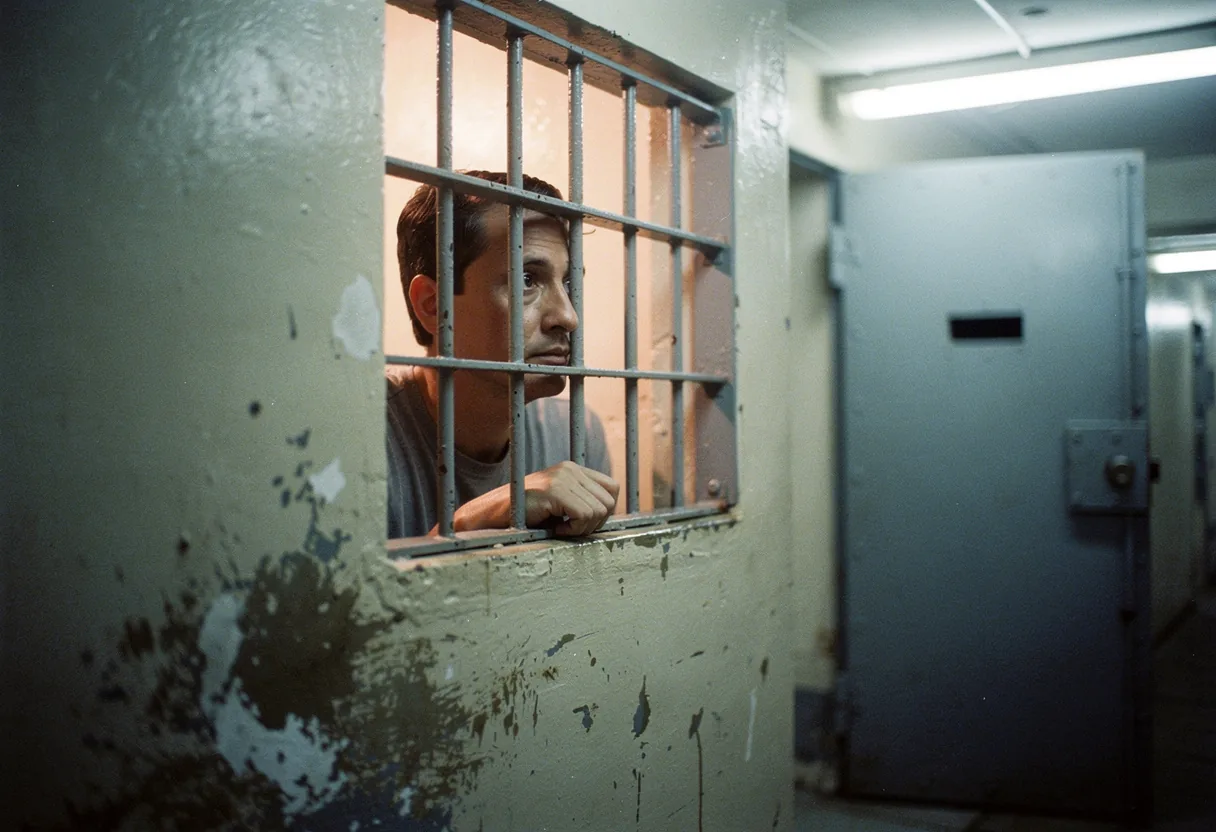
Conditions in Colombian prisons and detention centers are often harsh and inhumane.
Simply put: Colombian prisons are like pressure cookers, overcrowded, underfunded, and ready to explode with tension.
Key facts
- According to the National Prison Institute, Colombian prisons operate at around 50% overcapacity.
- Inmates frequently face inadequate medical care, poor nutrition, and violence.
- The Colombian Constitutional Court has issued rulings to improve conditions, but enforcement is inconsistent.
| Prison | Capacity | Current Population | Overcapacity Percentage |
|---|---|---|---|
| La Picota | 4,000 | 8,000 | 100% |
| Bellavista | 2,500 | 4,500 | 80% |
| Pereira | 1,200 | 2,000 | 67% |
Arbitrary Arrest or Detention
Arbitrary arrests and detentions are common in Colombia, particularly targeting political activists.
Here is the gist: Arbitrary arrests are like a net cast indiscriminately, trapping both the guilty and the innocent.
Key facts
- The Colombian Commission of Jurists reports that arbitrary detentions often lack proper legal justification.
- Victims of arbitrary detention frequently experience prolonged pre-trial detention without due process.
- International organizations have called for reforms to address these systemic issues.
| Year | Number of Arbitrary Detentions | Percentage of Political Activists |
|---|---|---|
| 2020 | 500 | 30% |
| 2021 | 600 | 35% |
| 2022 | 700 | 40% |
Denial of Fair Public Trial
The denial of fair public trials is a significant issue in Colombia, particularly for political prisoners.
The bottom line: Denial of a fair trial is like a rigged game, where the rules are stacked against the defendant from the start.
Key facts
- The Inter-American Commission on Human Rights has documented numerous cases of unfair trials in Colombia.
- Political prisoners often face biased judges and prosecutors.
- Efforts to reform the judicial system have been met with resistance from vested interests.
Trial Procedures
Trial procedures in Colombia often fall short of international standards, particularly for political prisoners.
Plainly stated: Trial procedures in Colombia are like a maze, confusing, biased, and designed to trap the unwary.
Key facts
- The Colombian Constitutional Court has issued guidelines to ensure fair trial procedures, but enforcement is inconsistent.
- Defendants often lack access to adequate legal representation.
- International observers have called for greater transparency and accountability in the judicial process.
Political Prisoners and Detainees
Political prisoners and detainees in Colombia face unique challenges and violations of their human rights.
To break it down: Political prisoners in Colombia are like caged birds, singing songs of freedom while trapped in a system designed to silence them.
Key facts
- According to the Colombian Commission of Jurists, political prisoners often face harsher treatment than other inmates.
- The Colombian government has been criticized for using political detention as a tool to suppress dissent.
- International organizations have called for the release of political prisoners and the reform of detention practices.
Transnational Repression
Transnational repression is a growing concern in Colombia, affecting political activists and asylum seekers.
Put simply: Transnational repression is like a shadow that follows political activists wherever they go, threatening their safety and freedom.
Key facts
- The Colombian government has been accused of collaborating with foreign governments to target political activists abroad.
- Asylum seekers from Colombia often face continued persecution in their host countries.
- International organizations have called for greater protection for Colombian political activists and asylum seekers.
Property Seizure and Restitution
Property seizure and restitution are complex issues in Colombia, particularly for political prisoners and their families.
Put simply: Property seizure in Colombia is like a game of musical chairs, where the powerful seize what they want, and the vulnerable are left with nothing.
Key facts
- The Colombian government has implemented programs to restitute seized property, but progress is slow.
- Political prisoners and their families often face significant barriers to reclaiming their property.
- International organizations have called for greater transparency and accountability in the restitution process.
International Human Rights Mechanisms
International human rights mechanisms play a crucial role in addressing the situation of political prisoners in Colombia.
Put simply: These mechanisms are like beacons of hope, shining light on the darkest corners of human rights violations.
Key facts
- The United Nations Human Rights Council regularly reviews Colombia’s human rights record through the Universal Periodic Review (UPR) process.
- Amnesty International and Human Rights Watch publish detailed reports on Colombia’s human rights situation, highlighting cases of political prisoners.
- The Inter-American Commission on Human Rights (IACHR) has issued numerous reports and recommendations regarding Colombia’s human rights obligations.
| Organization | Key Activity | Impact |
|---|---|---|
| United Nations | Universal Periodic Review (UPR) | Regular scrutiny and recommendations for Colombia’s human rights record |
| Amnesty International | Detailed reports and campaigns | Raising awareness and pressuring the Colombian government for reforms |
| Inter-American Commission on Human Rights | Reports and recommendations | Highlighting systemic issues and advocating for policy changes |
Civil Society and Advocacy Groups
Civil society and advocacy groups in Colombia are instrumental in advocating for the rights of political prisoners.
Put simply: These groups are like the backbone of the human rights movement, providing essential support and advocacy.
Key facts
- The Colombian Commission of Jurists is a leading organization documenting human rights abuses and advocating for legal reforms.
- The National Center for Historical Memory works to document and preserve the memories of victims of human rights violations.
- Local grassroots organizations, such as the Colombian Campaign to Retake Social Movements, provide direct support to political prisoners and their families.
Steps Toward Reform
To address the human rights situation of political prisoners in Colombia, several steps can be taken.
- Strengthen legal frameworks to ensure fair trials and due process for all detainees.
- Improve prison conditions, including providing adequate medical care and reducing overcrowding.
- Enhance international cooperation to monitor and report on human rights violations.
- Support civil society organizations in their advocacy efforts and provide resources for their work.
Examining the human rights situation of political prisoners in Colombia demands a multifaceted approach, addressing legal, social, and political dimensions. By looking at the challenges and violations faced by these prisoners, we can better advocate for their rights and seek systemic reforms.
Frequently asked questions
Who qualifies as a political prisoner in Colombia?
Colombia’s laws define political prisoners as individuals detained for acts related to political opposition, social protest, or armed conflict. This includes activists, journalists, and members of guerrilla groups. The government often disputes these classifications, claiming many are common criminals. International observers, like Amnesty International, regularly challenge these denials.
How many political prisoners are currently held in Colombia?
Exact numbers are contested. The Colombian government reports fewer than 1,000, while human rights groups estimate between 3,000 and 5,000. The gap stems from differing definitions of political prisoners. The National Human Rights Commission has documented over 1,200 cases since 2016, highlighting the ongoing debate.
What legal protections exist for political prisoners in Colombia?
Colombia’s constitution guarantees due process and humane treatment. However, reports of torture, forced disappearances, and unfair trials persist. The Justice and Peace Law (2005) offers conditional amnesty for some offenses, but critics argue it fails to address systemic abuses. International pressure has led to some reforms, but enforcement remains inconsistent.
What role do international organizations play in addressing political imprisonment in Colombia?
Groups like the UN, Amnesty International, and Human Rights Watch monitor conditions, pressure the government for reforms, and document abuses. The Inter-American Commission on Human Rights has issued rulings against Colombia for violations. These organizations also support local activists and families of prisoners, providing legal aid and public advocacy.